Commercial coffee machines deliver fast, consistent, café-grade coffee with minimal fuss.
Picture this. It’s 7:45 a.m., the line is out the door, and your staff is juggling orders, milk, and snacks. You need a brewer that hits temp, pours on time, and stays hot without guesswork. That is where commercial coffee machines shine. They brew fast, hold heat well, and keep flavor steady cup after cup. They cut wait times and stress. They also protect your brand with a reliable taste that keeps people coming back. If you run a café, office, church, food truck, or diner, the right machine saves time and money every day.
SYBO 12-Cup Commercial Drip Coffee Maker
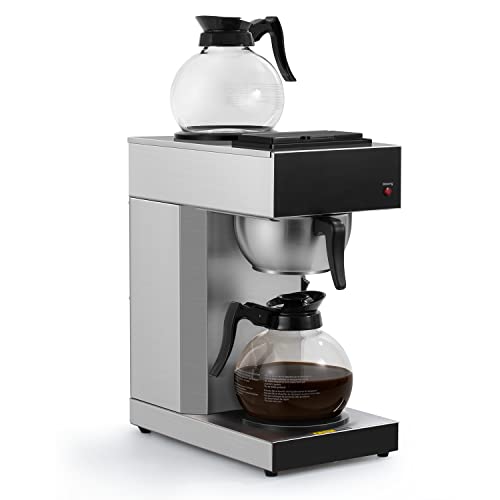
This SYBO 12-cup brewer is built for busy counters and simple workflows. It is a pour-over unit, so you do not need to plumb it in. That makes it easy to place on a bar or a cart. It heats fast and supports two glass carafes with separate warmers. The stainless body wipes clean and stands up to daily use.
The controls are simple and clear. Staff can learn it in minutes. The warmers help you rotate fresh pots and keep heat steady. The carafes pour well and resist drips. If you want a low-cost entry to commercial coffee machines, this model fits the bill.
Pros:
- Fast heat-up and quick brew cycles for rush hours
- Two warmers for better pot rotation and fresh taste
- Pour-over design avoids plumbing and cuts install time
- Stainless steel housing resists dents and stains
- Simple controls reduce staff training time
- Glass carafes let you see volume at a glance
- Consistent temperature helps steady extraction
- Compact footprint suits small counters and food trucks
- Good value for tight budgets and new shops
- Easy to move for events, catering, and pop-ups
- Separate warmers reduce flavor loss between brews
- Parts and accessories are easy to find
- Clear on/off and warmer switches for quick checks
- Fits standard 12-cup commercial filters
- Works well with water from most sources when filtered
Cons:
- Pour-over means manual filling; not ideal for very high volume
- Glass carafes can break if mishandled
- No built-in timer for overnight pre-heat
- No plumbed option for automated refill
- Not for espresso or specialty milk drinks
My Recommendation
This SYBO brewer suits small cafés, offices, church halls, trucks, and pop-ups. It shines when you need speed, simple use, and a fair price. It also works as a backup brewer in larger shops. If you run a meeting room or lobby, this gives steady coffee all day with low fuss.
Commercial coffee machines should pay you back fast. This one does. It cuts wait time in the morning. It keeps heat steady between brews. It also teaches new staff fast. You will get fewer mistakes and less waste. For drip coffee, that is a big win.
Think about volume. If you brew all day for more than 80 cups per hour, you may need a larger plumbed unit. If you run under that, this model is strong. It is also easy to clean. That helps taste, safety, and the life of your gear. In 2026, many shops mix one plumbed unit with a pour-over backup. This SYBO can be that backup or your main brewer.
| Best for | Why |
|---|---|
| Small cafés and diners | Fast heat, two warmers, low cost, easy training |
| Offices and meeting rooms | Simple pour-over use, steady heat, easy cleaning |
| Food trucks and events | Portable, no plumbing, compact footprint |
If you want commercial coffee machines that are easy to install, this is a safe pick. You do not need a water line. You only need a grounded outlet and space for two carafes. It is ideal for spots that move or change layout. Think pop-up markets or shared kitchens. I have set up teams with this model and seen good results.
Here is how I would run it. Keep a basic brew ratio of 1:16 by weight. Use fresh, medium grind. Heat your carafe with a quick rinse of hot water before the brew. Start the brew, and move to the front warmer after drip stops. Rotate every 30 minutes to keep taste bright. This is a simple system that works for many crews.
Water makes or breaks drip coffee. Commercial coffee machines do best with filtered water. Aim for total dissolved solids near 75–150 ppm. Keep hardness in check to protect the heating elements. Use a filter cartridge if your feed water is hard. That will lower scale and keep brew temp stable. It also keeps flavor clear. The machine runs better and lasts longer.
Cleaning matters. At close, dump grounds, rinse baskets, and wipe warmers. Wash carafes with a non-abrasive cleaner. Descale based on your water and use. Many shops do a light descale monthly and a deep descale each quarter. This cuts service calls. It also holds brew temp near the ideal 195–205°F range. That is vital for good extraction and taste.
Want to cut waste? Use labeled airpots for peak hours. Brew into a carafe, then pour into an airpot to hold heat away from the warmer. This lowers the time on the hot plate and cuts cooked flavors. It is a small trick with a big payoff. Your regulars will notice the clean taste.
I also coach teams to use a simple freshness clock. Write the brew time on blue painter’s tape and stick it on the carafe handle. Toss or refresh after 60 minutes. This helps new staff and keeps standards clear. Commercial coffee machines can only do so much. Systems like this improve results with little effort.
Let’s talk cost. The SYBO is budget friendly. It uses common filters and parts. You will not need a plumber to set it up. Your main long-term cost is coffee and labor. Use a scale to dose grounds. This alone can cut waste by 10–15%. Over a year, that can pay for the brewer and more.
As of 2026, health codes in many areas focus on clean tools and safe temps. This unit supports both. The hot plates keep coffee hot. The brew cycle hits the right range for extraction. Use NSF-grade cleaners for the baskets and carafes. Document cleaning on a simple log. This will help during inspections and training.
What about speed? In busy tests, this brewer completes a full 12-cup cycle in a few minutes once hot. Warmers hold temp while you brew another pot. That staggered flow keeps lines short. It also gives you a clear path during morning rush. I like to set one carafe for house blend and one for decaf. Guests see their choice fast, and staff avoid cross-use.
Noise is low. You can talk with guests while it brews. That matters in cafés and open offices. Some commercial coffee machines can be loud. This one blends into the background. That calm feel is good for service and focus.
Durability? The stainless shell holds up. The switches are simple. There is less to fail. Glass can break, but that is true for any carafe system. Keep a spare carafe and basket on hand. That way a drop never shuts you down. Spare parts are cheap and easy to store.
If you scale up later, you can keep this as a backup. Or place it in a meeting room. Or use it for events. You get strong flexibility for a low price. I often suggest buying two if you plan to grow. One stays on the bar. One goes to catering and outreach.
Do not forget training. A 10-minute session covers grind, dose, water fill, start, and rotate. Make a one-page guide with photos near the brewer. New staff learn fast this way. Commercial coffee machines turn great with clear steps and habits.
In short, the SYBO gives you the core you need. Hot water at the right range. A steady flow rate. Warmers that help you manage time. A body that can take a knock. You will serve coffee that tastes the same, cup after cup. That keeps guests happy and your brand strong.
For drip-focused menus, this is a smart buy. For a latte-heavy shop, pair it with an espresso machine. Many cafés do both. Drip covers volume and speed. Espresso covers milk and specialty drinks. Together they serve a wide base with grace.
When I advise new owners, I stress this. Buy for your next 18 months, not just today. If your plan is to add seating or events, pick gear that can shift with you. The SYBO’s pour-over design gives you that freedom. It also lowers risk on day one. If you ever move, the brewer moves with you. That makes it a low-stress asset.
Last tip. Keep a spare box of filters, a descaler, and a backup carafe in a labeled bin near the brewer. This tiny kit saves a shift when stock runs low. You will avoid last-minute runs and delays. It is one of those small systems that set good shops apart.
Bottom line. Among commercial coffee machines in this price tier, the SYBO 12-cup stands out for ease, speed, and value. If you need a no-nonsense drip brewer that just works, this is it. It helps new shops start strong and helps seasoned teams handle rush with less stress. I would buy it for a small café, office, or mobile setup without a second thought.
FAQs Of commercial coffee machines
How many cups per hour can a 12-cup brewer handle?
Most 12-cup commercial brewers can do 60–100 cups per hour once hot. The exact rate depends on heat recovery, staff flow, and rotation. Stagger pots to keep service smooth.
Do I need a water filter for commercial coffee machines?
Yes, in most areas. A filter improves taste and protects the heating parts from scale. Aim for moderate hardness and stable TDS for best extraction and longer life.
What brew temperature is ideal for drip coffee?
Target 195–205°F during brew. This range supports good extraction and balanced taste. Keep carafes warm but avoid long hot plate times to prevent cooked notes.
How often should I descale a commercial brewer?
It depends on water hardness and use. Many sites descale monthly and deep clean each quarter. Track it on a log and adjust to your local water.
Is a pour-over brewer enough for a busy café?
Often, yes, if volume is moderate and you manage rotation well. For very high volume, consider a plumbed twin brewer or add a second pour-over unit. Match gear to demand.
Final Verdict: Which Should You Buy?
The SYBO 12-cup is a strong entry pick among commercial coffee machines. It is fast, simple, and easy to place. It suits small cafés, offices, events, and backup use.
If you value low setup cost and quick training, choose this brewer. If your demand is huge, step up to a plumbed model. Either way, focus on water, cleaning, and rotation to win each day.