A stovetop pot left simmering for hours on a busy weeknight is the reason most people end up ordering takeout instead.
An electric pressure cooker cuts that same dish down to under an hour while you do something else entirely, since the sealed pot builds pressure and locks in moisture on its own. Here are five worth buying, from the classic all-rounder to a compact mini for small kitchens.
Electric Pressure Cookers Worth Buying
Instant Pot Duo 6 Qt 7-in-1 Electric Pressure Cooker

The name most people already picture when they hear “electric pressure cooker,” and for good reason — seven functions in one pot (pressure cook, slow cook, rice cooker, steamer, sauté, yogurt maker, and warmer) cover nearly everything a home kitchen needs. Six quarts feeds a family of four to six comfortably.
Cosori Pressure Cooker 6QT 9-in-1

A ceramic-coated inner pot instead of the usual stainless steel means easier cleanup and no metallic aftertaste on delicate dishes like yogurt or rice pudding. Twelve documented safety features make it a solid pick for a first-time pressure cooker owner who’s nervous about the sealed-lid part.
Instant Pot Duo 7-in-1 Mini Electric Pressure Cooker, 3 Quart

The same seven functions as the full-size Duo shrunk into a 3-quart pot that fits on a dorm-room shelf or a studio-apartment counter. Right-sized for cooking for one or two rather than a 6-quart pot that’s mostly empty.
Midea 12-in-1 Electric Pressure Cooker, 8 Quarts
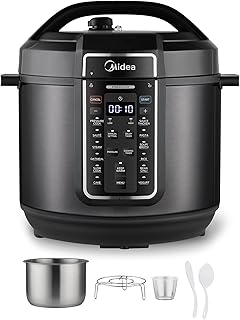
Eight quarts and twelve presets make this the pick for a large household or anyone who regularly cooks in batches to freeze for later. The extra headroom matters more than people expect — pressure cookers should never be filled past two-thirds full, so a bigger pot means bigger meals.
COMFEE’ 12-in-1 Electric Pressure Cooker, 6 Quarts

A nonstick inner pot at a friendlier price point than the name-brand options, useful for anyone testing whether they’ll actually use a pressure cooker regularly before spending more. Twelve presets cover the common dishes without needing to guess at times and pressure levels.
What to Look for in an Electric Pressure Cooker
Pot size should match how you actually cook, not how you might cook someday — a 3-quart mini is plenty for one or two people, 6 quarts covers most families, and 8 quarts-plus is for batch cooking or a full house. An oversized pot with a small portion inside won’t come to pressure as evenly.
Inner pot material matters for cleanup and cooking: stainless steel is the most durable and safest for browning at high heat, ceramic-coated is easier to wipe clean but needs gentler utensils, and nonstick is the easiest of all but wears out faster than the other two.
Every model on this list will pressure-cook, but the number of presets and extra modes (sauté, slow cook, yogurt, rice) determines how many other appliances it can actually replace on your counter, which is usually the real reason people buy one in the first place. If you already own a rice cooker and are deciding between the two, most electric pressure cookers handle rice just as well and free up counter space.
Pressure cooking is very safe on modern electric models thanks to multiple built-in lock and release safeguards, but the basic rules still matter — never fill past the max line, and follow the manufacturer’s guidance on liquid minimums and natural vs. quick release. The National Center for Home Food Preservation has a clear rundown of pressure-cooking fundamentals if you want the technical detail.
FAQs
Is an electric pressure cooker the same as an Instant Pot?
Instant Pot is a specific brand, similar to how Kleenex is a brand of tissue — it’s one of the most popular electric pressure cooker makers, but Cosori, Midea, COMFEE’, and others make the same style of appliance and often at a lower price.
How much faster is pressure cooking than a slow cooker?
Considerably faster — a dish that takes 6-8 hours in a slow cooker often finishes in 30-45 minutes under pressure, since the sealed pot traps steam and raises the internal temperature well above a normal simmer.
Do I need to buy accessories separately?
Most pots ship with the basics (steaming rack, measuring cup, sealing ring) already included. A second sealing ring is worth buying separately if you cook both savory and sweet dishes, since the silicone can hold onto strong odors.
Final Thoughts
The Instant Pot Duo 6 Qt is the safest starting point for most households, while the Mini is the better call if you’re cooking for one and the Midea 8-Quart makes more sense if you regularly cook for a crowd.