
Declutter, make zones, add organizers, and label everything.
You open a cabinet for a pan and a lid avalanche greets you. We have all been there. When cabinets turn into a jumble, cooking slows down and cleanup becomes a chore. The fix is simple and lasting if you set a plan, use the right tools, and keep it light. I’ll show you how to organize kitchen cabinets like a pro with step-by-step moves and vetted products that work in real homes. I test racks, shelves, and pull-outs the way a busy cook uses them: fast, hard, and every day. Let’s make your storage simple, calm, and easy to keep.
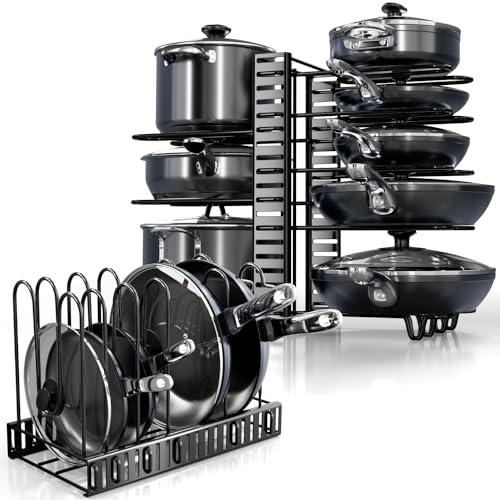
Pots and Pans Organizer Under…
POTS AND PANS ORGANIZER UNDER CABINET – 2 MINUTES INSTALLATION. Turn chaos into order effortlessly with our pot and pan organizer for cabinet. Install it in mere minutes with our…
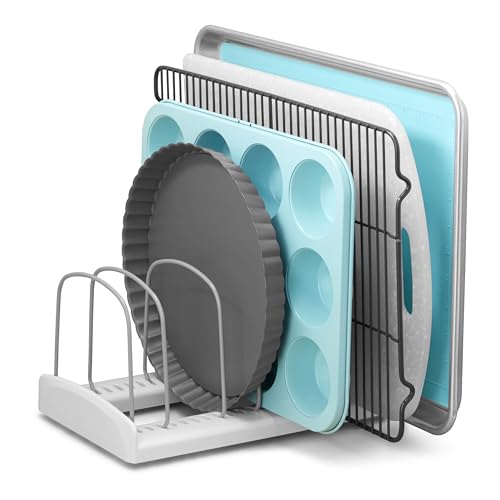
YouCopia StoreMore Adjustable Bakeware Rack,…
FLEXIBLE STORAGE: Includes seven adjustable dividers to organize your bakeware, cutting boards, and pans in a lower cabinet or pantry. Dividers keep bakeware upright and separated, so you can quickly…
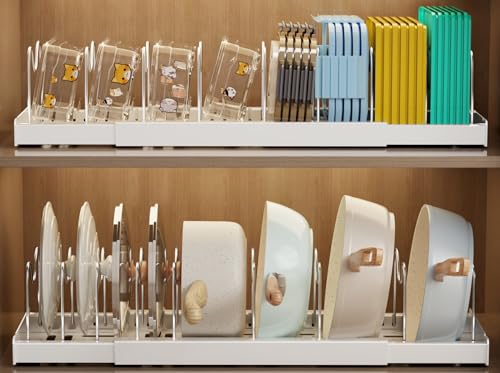
Mustorn 2 Pack Pots and…
【Dual-purpose Lid Rack】This pots and pans organizer under cabinet can be used to store the lids of pots, pans, and utensils, as well as the lids of food storage boxes….
8-Tier Under-Cabinet Pot and Pan Organizer

This 8-tier pot and pan organizer brings order to tall stacks and loose lids. The frame feels solid and stable, even with heavy skillets. I like that you can configure it in vertical or horizontal layouts. The adjustable dividers let you fine-tune each slot for thick cast iron or thin sheet pans.
If you cook daily and hate noisy stacks, this rack is a quiet hero. Slide a pan out with one hand, and you are cooking in seconds. It also frees the cabinet base for lids or mixing bowls. Use it near your cook zone to cut steps during meal prep.
Pros:
- Eight adjustable tiers fit pans, lids, and trays of many sizes
- Vertical or horizontal setup works in tight or wide cabinets
- Heavy-duty build stays steady with cast iron and steel pans
- Easy access reduces stacking noise and scratches
- Fast install with clear slots and simple hardware
Cons:
- Might not fit very deep woks or oversized grill pans
- Needs careful measuring in narrow base cabinets
- Dividers can loosen if not seated fully
My Recommendation
If you want to stop stacking pans, start here. This rack shines for cooks who keep multiple skillets and lids in one cabinet. It cuts clutter, saves time, and makes cleaning up faster. If you are learning how to organize kitchen cabinets, a strong pot and pan rack is step one for the cook zone.
| Best for | Why |
|---|---|
| Heavy cookware collections | Stable frame and adjustable slots handle weight and size |
| Small kitchens | Vertical setup saves base space and keeps pans upright |
| Busy weeknight cooks | One-hand grab-and-go access reduces prep time |
YouCopia StoreMore Bakeware Rack (Adjustable)

This YouCopia rack solves the cookie sheet and cutting board shuffle. The adjustable dividers create snug slots for sheet pans, trays, platters, and even lids. The base is sturdy and sits flat, so items do not tip. If you bake, this rack brings instant calm to a messy cabinet.
I like how easy it is to set up. Snap in the dividers and slide in your gear. The open design makes it simple to see exactly what you have. Pair it with a shelf riser to double your vertical space in seconds.
Pros:
- Adjustable dividers fit thin and thick bakeware
- Non-slip base keeps the rack in place
- Open design improves visibility and access
- No tools needed for setup
- Works for pans, boards, and serving trays
Cons:
- Not ideal for very heavy cast iron pieces
- Slots can be tight for large roasting pans
- White color shows stains if not wiped
My Recommendation
Choose this if you want your bakeware neat and easy to grab. It is perfect near the oven or baking zone. It helps anyone learn how to organize kitchen cabinets by turning a pile of pans into tidy, upright files. If you love cookie sheets and trays, this one is a must.
| Best for | Why |
|---|---|
| Bakers and meal preppers | Fits sheet pans, cooling racks, and muffin tins |
| Low, wide cabinets | Upright storage reduces stacking and sliding |
| Quick installs | No tools needed and fast to adjust |
Mustorn Expandable Lid Organizers (2-Pack, 22-Inch)

This 2-pack of Mustorn lid organizers expands to fit a wide cabinet run. Each unit includes nine adjustable dividers. That means you can slot lids, container tops, and even small cutting boards. I like the 22-inch expansion, which helps fill long shelves with no wasted space.
If you struggle with missing lids, this setup ends the hunt. Stand lids upright, group by size, and label the front. The coated frame keeps things from scratching. Put one organizer for pot lids and the other for food container lids to stay tidy.
Pros:
- Expandable length maximizes cabinet width
- Nine adjustable dividers per unit for custom spacing
- Coated steel helps prevent slips and scratches
- Great for both pot lids and container lids
- Two-pack covers multiple cabinets or zones
Cons:
- Long length needs a clear, flat shelf
- Very thick lids may need wider gaps
- Best on shelves, not great in deep drawers
My Recommendation
This is the lid system that makes order stick. If you want to learn how to organize kitchen cabinets for real-life use, start by taming lids. Use one unit near your pots and the other near your food containers. It prevents lost matches and saves time every day.
| Best for | Why |
|---|---|
| Families with many containers | Two units manage lots of lids and sizes |
| Wide shelves | Expandable length fills the space efficiently |
| Label lovers | Upright storage makes labeling and sorting easy |
SONGMICS Stackable Cabinet Shelves (Set of 2)

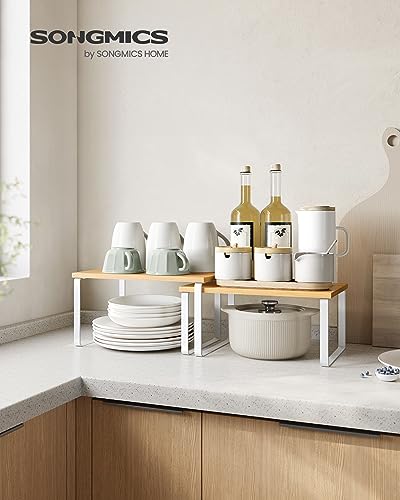
These SONGMICS shelves add a second layer inside a cabinet. The design is stackable and expandable, so you can build up or spread out. The metal frame and engineered wood top feel solid. It works well for plates, bowls, mugs, spices, and canned goods.
I like using one shelf for cups and the other for small bowls. By doubling vertical space, you stop stacking tall towers. That makes grab-and-go simple and safe. If you have a shelf that feels like wasted headroom, this is a fast fix.
Pros:
- Stackable design doubles vertical space
- Expandable width fits different cabinet sizes
- Sturdy construction with a clean look
- Great for dishes, glasses, and spices
- Simple assembly and easy to move
Cons:
- Not ideal for very heavy appliances
- Wood top needs a wipe after spills
- May wobble if not leveled on uneven shelves
My Recommendation
Use these shelves to eliminate wasted space. If your plates and mugs are in unstable stacks, this is a smart upgrade. It helps you master how to organize kitchen cabinets by adding a second level that fits your items. Stack them for tall cabinets and slide them apart for spices.
| Best for | Why |
|---|---|
| Dishes and mugs | Creates stable layers for safe grabbing |
| Pantry items | Expands to hold spices, cans, and jars |
| Renters | No drilling; easy to remove and reuse |
Mustorn Pull-Out Cabinet Drawers (2-Pack)

These Mustorn pull-out drawers upgrade deep cabinets without drilling. The peel-and-stick base and heavy-duty rails make for a smooth glide. I prefer pull-outs for cleaning supplies, pans, or snacks. They turn a dark cabinet into a slide-out pantry you can see and reach.
The size works well for most base cabinets. Measure depth and door clearance first. I like the low sides that keep bottles and jars secure but visible. Two drawers give you a lower and upper layer that move out to you.
Pros:
- No-drill install with strong adhesive base
- Smooth glide rails improve access and visibility
- Great for pans, cleaners, wraps, and snacks
- Low walls keep items in place but easy to see
- Two-pack creates a full pull-out system
Cons:
- Adhesive needs clean, dry surfaces to hold
- Not ideal for very heavy appliances
- Door hinges may limit full extension in some cabinets
My Recommendation
If you hate bending and digging, use pull-outs. They bring the back of the cabinet to you. They also teach how to organize kitchen cabinets by forcing clear sections for tools, bottles, and dry goods. Great for renters or anyone who wants a no-drill upgrade.
| Best for | Why |
|---|---|
| Deep, dark base cabinets | Pull-out access shows everything at once |
| Cleaning supplies | Keeps bottles upright and easy to reach |
| Renters and DIYers | Peel-and-stick install avoids drilling holes |
A Step-by-Step Plan to Organize Kitchen Cabinets
I have organized hundreds of kitchens. The steps stay the same because they work. Follow this plan to master how to organize kitchen cabinets with less stress and more speed.
Step 1: Empty and sort. Pull everything out. Wipe shelves with warm, soapy water. Sort into keep, toss, donate. If you do not use it, it does not earn space.
Step 2: Group by task. Make zones: prep (bowls, cutting boards, knives), cook (pots, pans, oils), bake (mixers, pans, measuring tools), serve (plates, glasses), store (containers, wraps), clean (sponges, sprays). This is the backbone of how to organize kitchen cabinets.
Step 3: Measure and map. Measure shelf width, depth, and height. Note hinge and door swing. Sketch zones on paper. Pick organizers that fit your numbers, not the other way around.
Step 4: Add vertical layers. Use stackable shelves for dishes. Use adjustable racks for pans and bakeware. Use lid organizers to stop the matching game. This is where the right product pays off.
Step 5: Label lightly. A small label on the shelf edge helps your family put things back. Label by category, not by item, for flexibility. Examples: “Bakeware,” “Meal Prep,” “Snacks.”
Step 6: Set a reset habit. Do a 5-minute reset after dinner. Return things to zones. Wipe crumbs. This is how to organize kitchen cabinets for the long run, not just day one.
Smart Zoning That Makes Cooking Faster
I use a simple rule: Store items where you use them. Think of your kitchen as lanes on a highway. Keep traffic smooth by placing tools in the lane they serve.
- Prep Zone: Cutting boards, knives, mixing bowls, measuring cups. Close to the sink and trash.
- Cook Zone: Pots, pans, oils, spices. Close to the stove.
- Bake Zone: Sheet pans, muffin tins, cooling racks. Near the oven.
- Serve Zone: Plates, bowls, glasses, flatware. Near the table or dishwasher.
- Storage Zone: Containers, wraps, foil, zip bags. Near the fridge.
- Clean Zone: Dish soap, sponges, towels, sprays. Under the sink or a pull-out drawer.
Use this map when choosing products. A pan rack belongs by the stove. A bakeware rack belongs near the oven. A lid organizer sits where its pots live. This is a practical way to show anyone in your home how to organize kitchen cabinets without guesswork.
How to Measure for a Perfect Fit
Measuring makes installs painless. It prevents returns and bad fits. Grab a tape measure and note these numbers.
- Width: Inside width of the cabinet or shelf. Check front and back in case of bowing.
- Depth: From back wall to the inside of the closed door. Account for door frame and hinges.
- Height: From shelf to shelf or shelf to cabinet top. Look for light fixtures or braces that hang down.
- Obstructions: Hinges, gas lines, water pipes, and disposal units under the sink.
Compare your numbers to the organizer’s size. Leave a tiny gap for easy placement and cleaning. This care up front is the quiet secret of how to organize kitchen cabinets without stress.
Material Choices: What Works and Why
Coated steel: Durable and easy to wipe. Good for racks, dividers, and pull-outs. It holds up to daily use.
Engineered wood: Looks clean and adds warmth. Use for shelf risers and light storage. Wipe spills fast to prevent swelling.
Plastic: Light and affordable. Great for bins and labels. Choose BPA-free for food areas.
Choose materials based on what you store. Heavy pans need steel. Dishes like smooth shelves. Clear bins help you see snacks. This is a simple part of how to organize kitchen cabinets that many skip.
Safety and Care Tips You Should Not Skip
- Store heavy items low. Keep cast iron and appliances on the bottom shelf.
- Use non-slip liners on smooth shelves. It stops sliding and protects finishes.
- Keep cleaners away from food. Use a pull-out with a low wall for bottles.
- Wipe spills fast. Oils and sauces attract dust and pests.
- Audit seasonally. In spring and fall, toss chipped plastics and expired goods.
Small habits protect your space. This is how to organize kitchen cabinets and keep them safe for years.
Seven Common Mistakes (and Easy Fixes)
- Stacking too high: Add a shelf riser to split the stack.
- Hiding lids: File them upright with dividers.
- Deep cabinet blind spots: Use pull-out drawers.
- Random placement: Set clear zones and label edges.
- Too many gadgets: Keep only what you use monthly.
- Ignoring door space: Use hooks or slim racks for light items.
- Skipping the reset: Do a 5-minute tidy after dinner.
These fixes are quick. They also teach how to organize kitchen cabinets in a way that sticks.
Budget-Friendly Organizing Ideas
- Use tension rods to file cutting boards in a narrow cabinet.
- Repurpose clear food containers as drawer bins.
- Add stick-on hooks inside doors for oven mitts.
- Use shelf labels from masking tape and a marker.
- Try a lazy susan for oils and sauces.
Start with what you have. Add one or two key products where they matter most. That is a smart way to learn how to organize kitchen cabinets without overspending.
Maintenance: Keep It Easy, Keep It Clean
Do a weekly check. Toss obvious clutter. Wipe crumbs. Real life is busy. Your system must bend and bounce back.
Monthly, choose one cabinet to refresh. Re-stack dishes. Tighten a loose divider. Replace a bin that cracked. Small care prevents big chaos.
Seasonal, do a deeper reset. This is the long-term answer to how to organize kitchen cabinets so it lasts all year.
FAQs Of how to organize kitchen cabinets
Where should I store heavy pots and appliances?
Keep them on the lowest shelf or a pull-out drawer. It is safer and easier to lift.
How do I stop lids from getting lost?
Use an upright lid organizer with adjustable slots. Place it beside the pots and pans zone.
What should go near the stove?
Pots, pans, oils, and everyday spices. Keep them within one or two steps for speed.
How often should I reorganize cabinets?
Do a quick weekly reset and a seasonal declutter. It keeps the system fresh.
What is the best way to label shelves?
Use small, clear labels by category. Place them on the front edge for easy reading.
Final Verdict: Which Should You Buy?
If pans are your pain point, start with the 8-Tier Under-Cabinet Pot and Pan Organizer and the YouCopia Bakeware Rack. They fix stacks and make cooking faster.
For full control, add the Mustorn Lid Organizers, SONGMICS Shelves for dishes, and Mustorn Pull-Out Drawers. Together, they show how to organize kitchen cabinets in a simple, lasting way.


One Comment